
Ethical Use of AI
RiverPoint is committed to using AI to empower human creativity while respecting the rights and contributions of original creators.
We believe AI can lower barriers for creators while respecting the intellectual property that fuels our industry, fostering an ecosystem where both innovation and originality can thrive.
Enhance not Replace
RiverPoint's AI-assisted tools are designed to support, not replace, human judgment and artistic vision. All AI-generated suggestions are intended as starting points for human creators to further refine and mould into their own vision.
Respect
We do not train our models on copyrighted content without proper authorisation. We implement safeguards to prevent our tools from reproducing protected works.
Transparency
We maintain transparency about when and how AI is used in the creative process, ensuring that users understand the origin of content.
Security and Encryption
Security and privacy are paramount—we protect user data, creative works-in-progress, and proprietary content with industry-leading encryption and access controls.
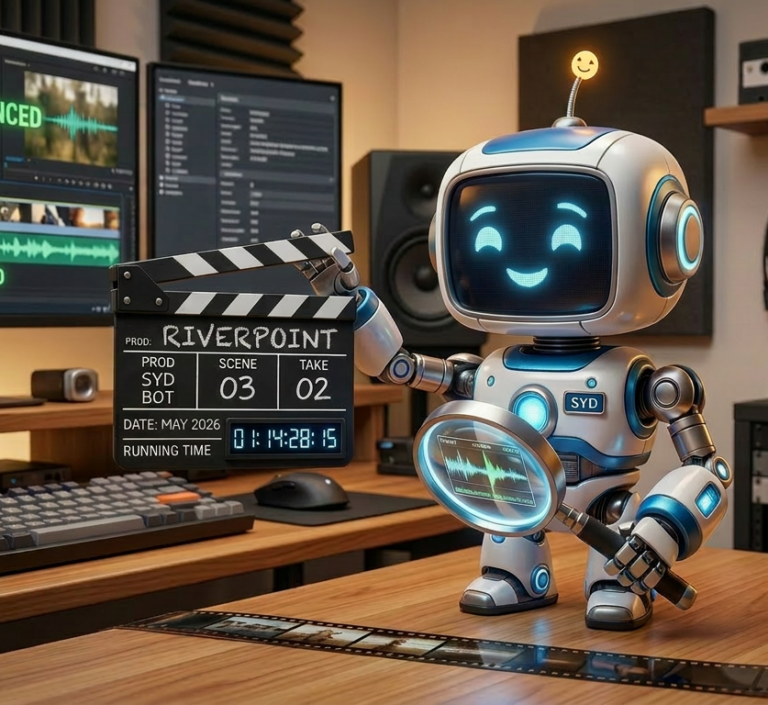
Our Approach to AI in Content Creation Tools
We are using AI to build tools that remove repetitive steps and add content insight to make a human editor's job easier.
Your Media Files:
- All media processing occurs locally on your computer
- Your creative content remains entirely on your local machine
- We do NOT upload, store, or access your video or audio files
Transcription Data:
- We do NOT collect or store transcripts of content generated by our tools
- All transcription occurs locally using on-device processing
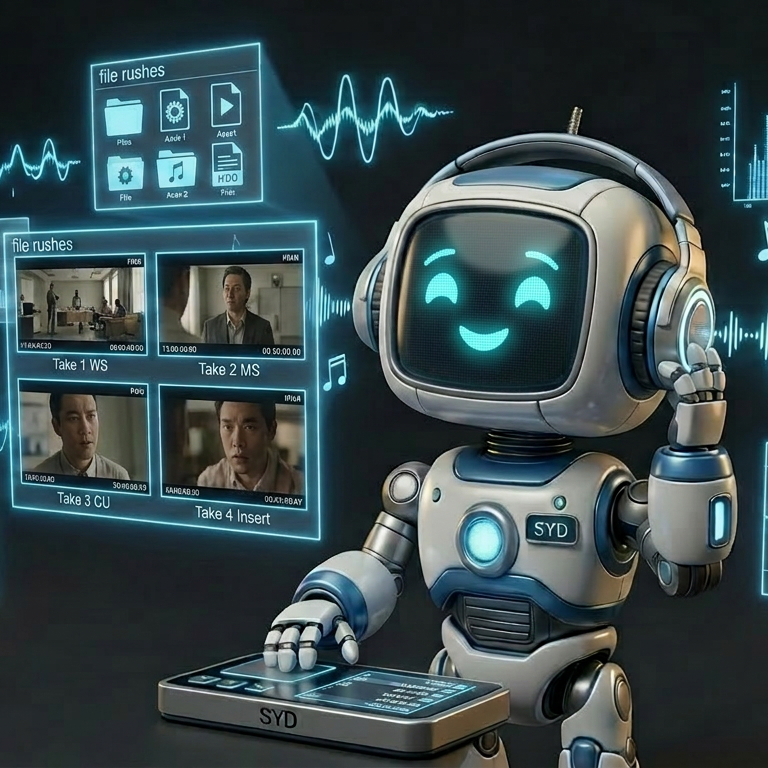
Content Indexing
Our tools can find and associate related content based on timing, faces, logos etc.
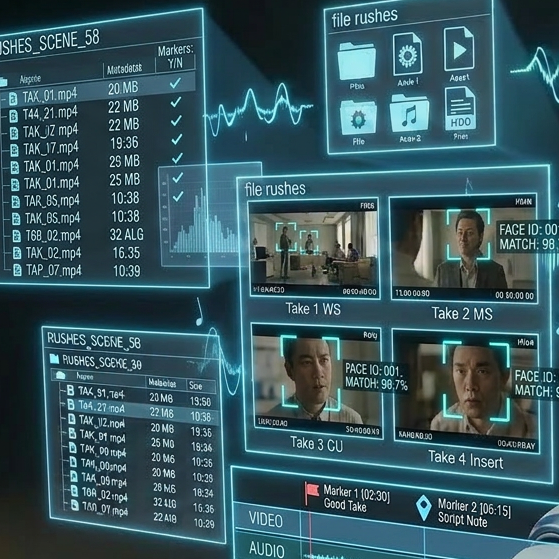
Metadata Standards
We are active in industry forums and align with emerging standards for content analysis (including C2PA provenance, SMPTE metadata standards).
SyncDetective
AI in Action
In SyncDetective, our AI platform analyses audiovisual content to identify technical patterns, visual similarities and time-synchronous actions. The system transcribes speech, detects scene changes, recognises faces, and assesses performance delivery characteristics (emotion, power, accuracy). All this analysis serves to reduce manual preparation work and reveal patterns within the content that would be time-prohibitive to find manually.